


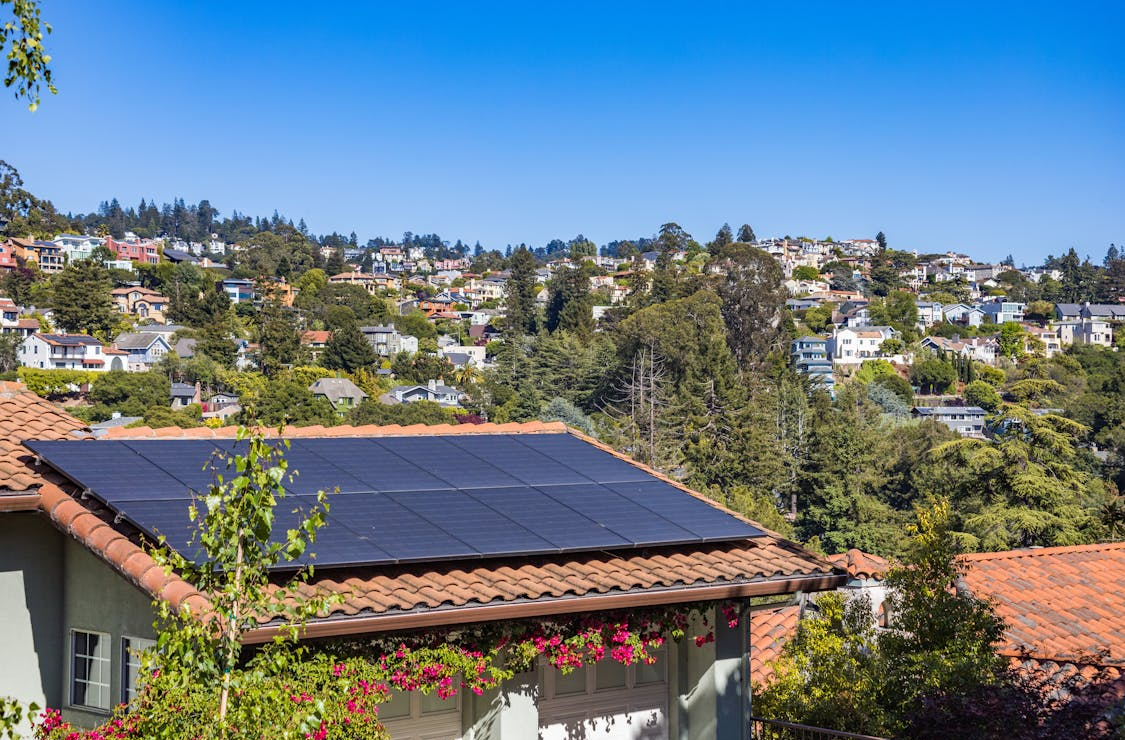
The Bay Area was among the first regions in the country to see widespread residential solar adoption. Systems that went up between 2009 and 2014 were installed on top of the best incentive structures available at the time, often with PG&E NEM 1.0 or early NEM 2.0 agreements that locked in retail-rate export credits. Many of those systems are still running, but “still running” and “performing well” are two different things.
Aging solar system upgrades are becoming an urgent conversation across the region because the convergence of hardware age, inverter obsolescence, new battery storage economics, and California’s current net billing structure is changing what it means for a system to be worth keeping in its current form. As a licensed solar energy contractor in the Bay Area, we are seeing this inflection point across a growing share of our service calls.
What Happens to Solar Equipment After 10-15 Years
Solar panels degrade at a rate of roughly 0.5% to 0.75% per year under normal conditions, according to research conducted by the National Laboratory of the Rockies (formerly NREL). A system producing at 100% in its first year is likely to produce at 92% to 94% by years 12 to 15. That alone is manageable. The more pressing issue is the rest of the hardware.
String inverters, which were the standard installation for most residential systems through the mid-2010s, carry an expected service life of 10 to 15 years. Many are now approaching or past that window. Racking hardware corrodes on coastal-facing homes. DC wiring insulation degrades with thermal cycling. At a certain point, a system is no longer aging gracefully. It is operating on components that were not designed to last indefinitely, and the failure modes tend to become more frequent.
Why Old Inverters Are the Biggest Bottleneck
String inverters from the early 2010s have a fundamental architecture problem beyond their age: they treat the entire array as a single output. One underperforming panel pulls down the whole string. They cannot provide per-panel monitoring data. And they cannot interface with modern battery storage systems, which require communication protocols that those older units were never designed to support.
Solar panel repairs in San Francisco on older string inverter systems often reveal that the inverter itself is the single most limiting component in the system. A microinverter upgrade, particularly to an Enphase IQ system, changes the architecture entirely. Each panel becomes independent. Per-panel monitoring becomes available. Battery compatibility is built in. The system that has been running in a constrained configuration for a decade becomes capable of doing things it never could before.
Battery Compatibility and NEM Status: The Two Upgrade Drivers
Under California’s Net Billing Tariff, export credits have been reduced substantially compared to NEM 1.0 and NEM 2.0. The financial case for self-consuming stored solar rather than exporting it has never been stronger. Battery storage closes that loop, but only if the solar system can communicate with the battery.
For homeowners on NEM 2.0, the calculus is more delicate. NEM 2.0 grandfathering survives for 20 years from the original interconnection date, but modifications that exceed CPUC thresholds, including capacity additions above 10% of the original nameplate rating, can trigger a move to the current net billing tariff. This does not mean upgrades cannot happen. It means they need to be planned carefully by someone who understands how the tariff rules interact with system changes. That planning is part of what we provide before recommending any hardware changes.
Signs Your System Is Due for a Professional Review
There are concrete indicators that a system has reached the point where a professional evaluation makes sense. Utility bills that have climbed back up despite having solar on the roof, even gradually over two or three years, suggest production loss. Inverter fault codes appearing in the monitoring app, especially repeat codes that clear and return, are early hardware warnings. If your monitoring platform has gaps or shows flat production curves that do not match the weather, the system is not performing as it should.
A system that has not had a professional inspection in more than two years is operating without current information. Our diagnostic evaluation covers inverter health, panel output relative to rated capacity, wiring condition, racking integrity, and shading changes. It gives homeowners a clear, honest picture of what the system can do, what is limiting it, and what a targeted upgrade would actually involve.
Old System, New Potential: Getting More From What You Have
Clean Energy Renewables Inc. specializes in solar upgrades and system modernization across the Bay Area. As a licensed solar energy contractor serving homeowners in San Francisco, Redwood City, San Jose, and surrounding communities, we assess older installations with current-generation hardware and design upgrades that are specific to each system’s actual constraints and the homeowner’s energy goals.
Whether it is an inverter replacement, a racking repair, a battery addition, or a full solar system overhaul, we build the path from what the system is to what it should be. If your Bay Area solar system is a decade old and you want to know where it stands, reach out to discuss residential solar services in San Francisco and schedule a diagnostic review.





Comments are closed