



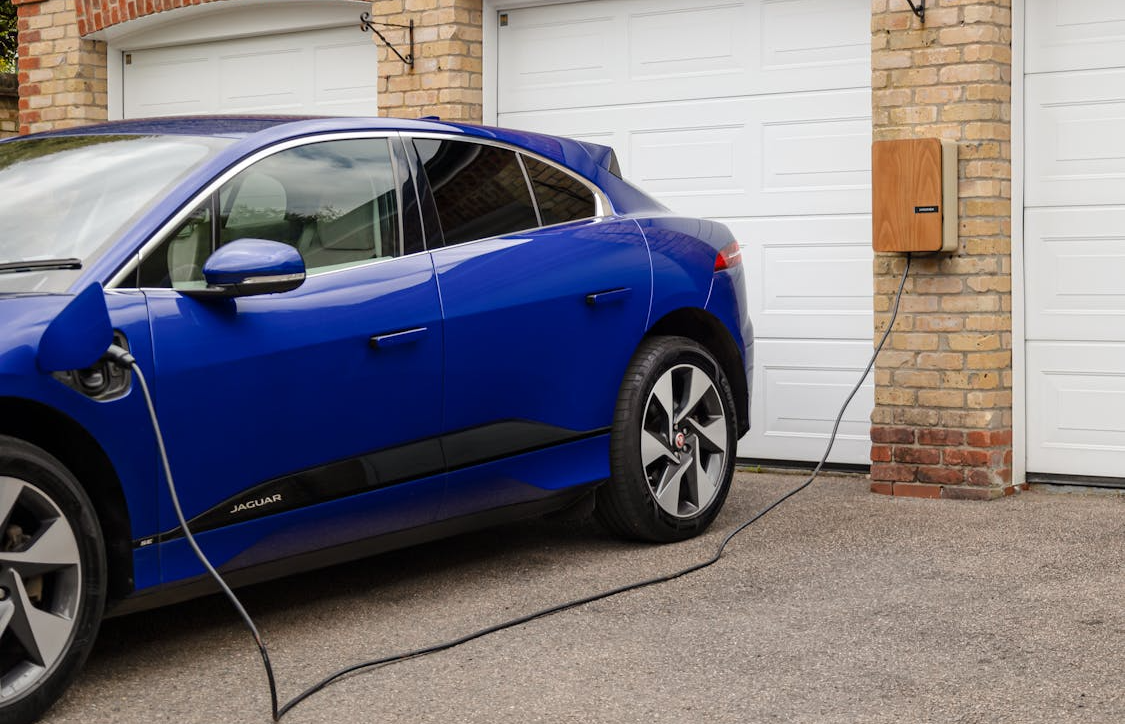
The Bay Area has one of the highest concentrations of electric vehicles in the country, and the public charging infrastructure has been struggling to keep pace. Anyone who drives an EV in San Francisco or along the Peninsula has experienced the problem firsthand: stations that are occupied, out of service, or simply not where you need them to be. For a growing number of drivers, the answer is not to wait for the public network to improve. It is to stop depending on it for everyday charging.
Benefits of home EV charging go well beyond convenience. A properly installed Level 2 home charger changes the economics, logistics, and reliability of owning an electric vehicle in ways that public charging simply cannot replicate. For Bay Area homeowners exploring EV charger installation in the Bay Area, the case is clearer than it has ever been.
The Public Charging Problem: Wait Times, Availability, and Reliability
The public charging network in California has expanded substantially, but utilization has grown faster. According to DOE Alternative Fuels Data Center data, the majority of EV owners who charge at home do so specifically because home charging eliminates the uncertainty inherent in relying on public stations. In dense urban areas like San Francisco, a single public DC fast charger shared among a high density of EV owners often has a queue during peak hours, particularly in residential neighborhoods where many apartment dwellers have no home charging option.
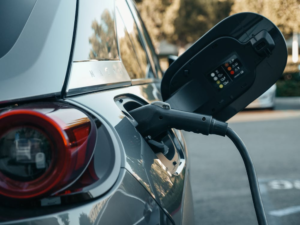
Beyond availability, station reliability remains inconsistent. Broken payment systems, non-functional connectors, and units taken offline for maintenance reduce the effective capacity of the public network below its nominal count at any given moment. For a driver who depends on public charging as their primary method, this creates a layer of logistical stress that home charging eliminates entirely.
What a Level 2 Home Charger Actually Delivers
A Level 1 charge from a standard 120V outlet delivers 3 to 5 miles of range per hour. A 60 kWh battery pack at this rate can take 30 or more hours to fully replenish from empty. For a vehicle used daily, this is not a viable primary charging solution. A Level 2 charger operating on a dedicated 240V circuit delivers 20 to 30 miles of range per hour, providing a full overnight charge for most EVs with room to spare.
Electric vehicle charger installers in San Francisco design installations to match the vehicle being charged. Different EVs accept different maximum charge rates, from 7.2 kW for older models up to 19.2 kW for newer high-capacity systems. A properly sized installation takes this into account, as does the available panel capacity in the home. The result is a charging speed calibrated to the vehicle and the electrical system, not a generic hardware choice.
Cost Comparison: Home Charging vs Public Network Pricing
The cost advantage of home charging has grown significantly as DC fast charger network pricing has risen. Many public DCFC operators now charge between $0.40 and $0.60 per kWh, with session fees on top. A typical 50 kWh charge at a public station can run $20 to $30 per session. At residential rates that average significantly lower per kWh than public network pricing, charging the same 50 kWh at home costs substantially less, and even less again for homeowners on off-peak time-of-use rates.
For households with rooftop solar, the math improves further. Solar energy generated during the day can charge a home battery, which then discharges into the EV overnight. The effective per-kWh cost of EV charging in this configuration approaches the cost of generation, which, for a paid-off system, is close to zero for the incremental energy used.
Installation Considerations for San Francisco and Bay Area Homes
San Francisco and the older Bay Area housing stock present specific installation challenges. Victorian and Edwardian homes often have 100-amp panels that were sized before electrification of heating, cooking, and transportation became the standard. Adding a 40-amp EV circuit to an already loaded panel requires a careful load calculation and, in many cases, a panel upgrade.
Our team handles the full scope: panel assessment, permit application, circuit installation, charger mounting, and post-installation inspection. We also plan for future systems, routing conduit and sizing the circuit to accommodate solar and battery additions down the line. Every installation is performed by licensed C-10 contractors and journeyman electricians, and every project is permitted through the appropriate municipal authority.
Pull Into Your Garage Fully Charged, Every Morning
Clean Energy Renewables Inc. installs home EV charging stations throughout San Francisco and the Bay Area, with home EV charging station installation in San Francisco handled under CA License #1119067 by C-10 contractors and journeyman electricians. We work with all major EV manufacturers and charging hardware, including Tesla charger installation in San Francisco and universal Level 2 setups compatible with every other EV on the market.
If you are spending time and money at public stations when you could be waking up every morning with a full charge at home, it is time to change that. Schedule a free home charging consultation and let our team design an installation that fits your vehicle, your panel, and your home.




Comments are closed