



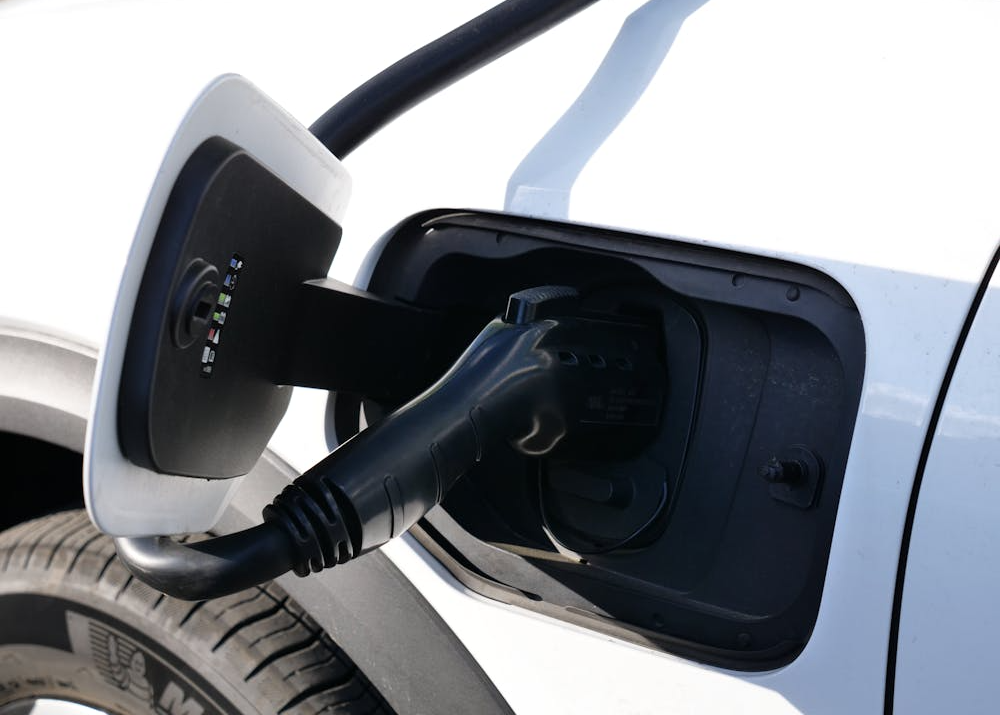
California now leads the nation in electric vehicle adoption, and the Bay Area sits at the center of that shift. Buyers arriving at a San Francisco open house are often EV drivers, or they intend to be within the next vehicle cycle. For them, a home without a dedicated charger creates an immediate practical problem that a buyer without an EV does not have to think about. That asymmetry is reshaping how properties are valued and marketed across the city.
EV charger impact on home value has moved from a niche appraisal question to a mainstream one, and the data is starting to reflect it. For homeowners planning a sale or wanting to protect long-term equity, EV charger installation in the Bay Area is no longer just a convenience upgrade. It is a positioning decision.
How Buyer Expectations Around EV Charging Have Shifted
California reached a milestone in early 2026 when the California Energy Commission announced that cumulative new ZEV sales in the state surpassed 2.5 million vehicles, with ZEVs representing roughly 19% to 25% of new vehicle sales each quarter through 2025. The Advanced Clean Cars II regulation requires 35% of new light-duty vehicle sales to be zero-emission by 2026. This is not a distant projection. It is the current market.
When one in four or more new vehicles sold is electric, a home charger stops being a specialty feature and starts functioning the way a dishwasher or HVAC system does: something a buyer notices when it is there and something they have to plan around when it is not. Buyers with EVs are increasingly asking about charging infrastructure upfront, and agents are flagging its absence as a gap in otherwise strong listings.
What Real Estate Professionals Are Saying About Home EV Chargers
The Department of Energy’s guidance for buyers considering homes with energy upgrades notes that solar panels and related energy infrastructure are increasingly viewed as upgrades similar to renovated kitchens, with buyers across the country willing to pay meaningful premiums for energy-ready homes. The same premium logic is beginning to apply to EV charging, particularly in markets like San Francisco, where EV ownership rates are among the highest in the country.
Appraisers are starting to treat a properly installed Level 2 charger as a value-contributing feature when comparable sales data supports it. In a market where buyers routinely prioritize move-in readiness, removing a pain point, specifically the need to plan and fund a charging installation after closing, is a tangible selling point. For sellers, the cost of a professional installation is often recovered in the purchase price or compressed negotiation.
The Difference Between Level 1, Level 2, and the Right Installation
Most EVs come with a Level 1 cordset that plugs into a standard 120V outlet. This delivers roughly 3 to 5 miles of range per hour of charging, which means a fully depleted battery can take well over 24 hours to replenish. This does not work as a primary charging method for most households. A Level 2 charger operates on a 240V circuit and delivers 20 to 30 miles of range per hour, providing a full overnight charge for most EVs regardless of battery size.
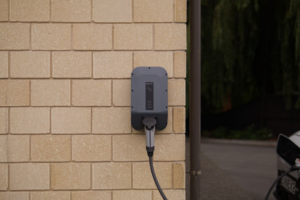
Home EV charging station installation in San Francisco involves more than running a circuit. A proper job includes a panel capacity assessment, load calculation, dedicated circuit installation, a weatherproof wall-mounted unit, and permit compliance under the California Electrical Code and NEC Article 625. Homes in San Francisco and the Bay Area often have aging panels originally sized for pre-electrification loads. Our team identifies these constraints before installation begins and addresses them as part of the project.
Integrating EV Charging With Solar and Battery Systems
A home that combines rooftop solar, battery storage, and a Level 2 EV charger represents the highest tier of energy-ready property in today’s San Francisco market. The combination allows an EV owner to charge primarily from solar energy generated on their own roof, stored in a home battery, and dispatched overnight when the car is parked. Operating costs drop significantly, and the household’s exposure to utility rate fluctuations is minimized.
These systems can be installed as a complete package or staged over time. A properly planned EV charger installation anticipates future solar and battery additions, including conduit routing and panel headroom for expansion. When our team handles an EV charger installation, we design it to be compatible with whatever comes next, so the homeowner does not face a rework when they add panels or storage down the line.
Charge Ready, Market Ready: Future-Proof Your San Francisco Home
Clean Energy Renewables Inc. installs EV chargers throughout San Francisco and the Bay Area, including Tesla charger installation in San Francisco and full home charging station setups for all major EV manufacturers. Every installation is handled by C-10 contractors and journeyman electricians under CA License #1119067, with full permitting and utility coordination included.
Whether you are preparing a property for sale, planning ahead for a new vehicle, or building out a complete home energy system, our team will assess your panel capacity, design the right installation, and handle every step from permit to power-on. Schedule a free EV charger consultation and find out what EV charger installation in San Francisco can add to your home.






Comments are closed