



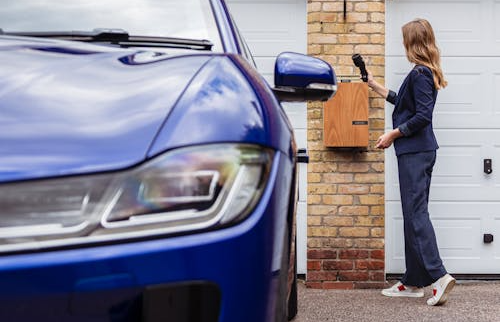
With electric vehicle adoption on the rise, homeowners are evaluating the best way to power their cars at home. According to the U.S. Department of Energy, residential charging accounts for over 80% of EV charging sessions nationwide, making choosing a home charging system critical for convenience and efficiency.
When comparing a Tesla charger vs universal EV charger, understanding differences in charging speed, installation cost, and future-proofing is essential.
Charging Speeds and Vehicle Compatibility
Tesla chargers are designed specifically for Tesla models, providing fast, reliable charging. Tesla’s Wall Connector delivers up to 44 miles of range per hour, which is faster than most Level 2 universal chargers.
Universal EV chargers, on the other hand:
- Support multiple EV brands, including Nissan, Chevrolet, and Ford.
- Typically provide 20–30 miles of range per hour, depending on the vehicle’s onboard charger.
- Use standard J1772 connectors, making them versatile for mixed EV households.
While Tesla owners get maximum performance with dedicated chargers, households with multiple EV brands may benefit from the flexibility of a universal solution.
Hardware and Installation Costs
Tesla charger installation generally costs $500–$700 for the hardware, plus installation fees. Universal EV chargers vary widely:
- Entry-level units start around $400.
- High-capacity chargers can exceed $1,000.
Additional costs can include upgrading electrical panels, running new circuits, and labor charges. Homeowners considering Tesla charger installation or EV charger installation should consult electric vehicle charger installers to ensure proper setup. Bundling with home battery backup services can provide added energy reliability and potential cost savings.
Future-Proofing Your Garage
Long-term considerations are important for garage planning:
- Tesla Charger: Optimized for Tesla vehicles but requires adapters for other EV brands.
- Universal Charger: Compatible with most EVs, supporting future vehicle purchases without additional hardware.
Integrating chargers with solar systems can improve sustainability. Companies offering solar design and installation can combine a home EV charging station with solar battery installation for continuous clean energy use.
Making the Right Choice
Selecting between a Tesla charger and a universal EV charger depends on your vehicle lineup, charging needs, and long-term energy goals. Making an informed decision today can help reduce future upgrade costs while supporting compatibility with evolving EV technologies.
For homeowners seeking professional support, Clean Energy Renewables Inc. offers licensed solar contractors and solar energy solutions to integrate charging with solar power. Contact us now to schedule a free solar consultation in San Francisco today to optimize your garage for any electric vehicle.






Comments are closed